College of Food Science, Southwest University
China-Hungary Belt and Road Joint Laboratory on Food Science



On the afternoon of September 15, Fang Lei, Secretary of the Party Leadership Group and Director oftheChongqing Science and Technology Bureau, led a delegation to Southwest University for an on-siteresearch visitof the China-Hungary Food ScienceBelt and RoadJoint Laboratory (hereinafter referred to as theBelt and RoadJoint Laboratory). Fan Daming, Vice President of Southwest University, heads of relevant functional departments of the university, and principals of theBelt and RoadJoint Laboratory attended the event.
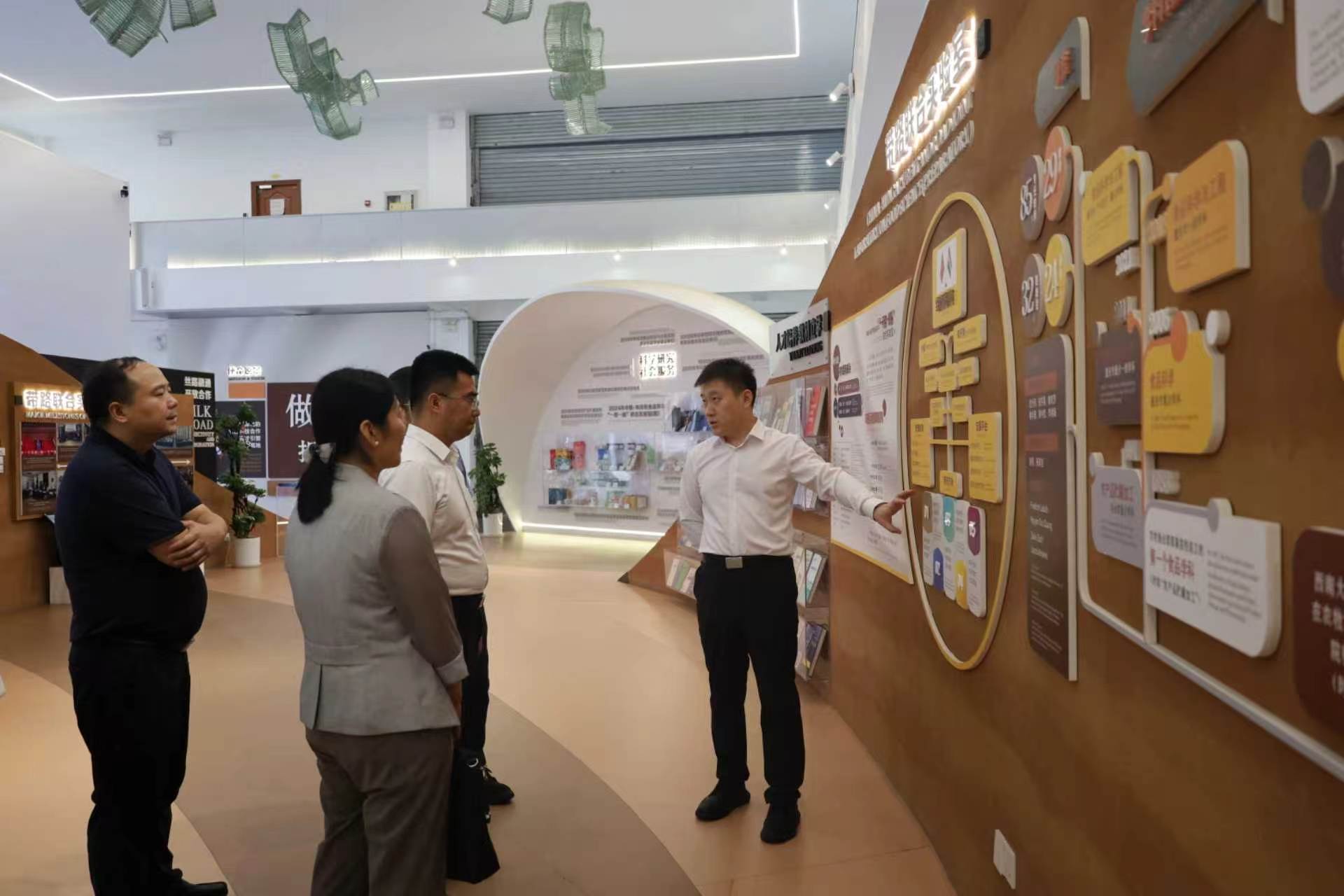
At theresearch visitsite, Fang Lei and his delegation visited the International CooperationPavilionof theBelt and RoadJoint Laboratory, and inspected in detail the platform's development history, physical construction, scientific and technological innovation, achievement transformation and international cooperation. Fan Daming gave a comprehensive introduction to the university's overall layout and phased achievements in deepening international sci-tech cooperation, industry-university-research integration, talent cultivation and serving local industrial development in the broad food sector by leveraging theBelt and RoadJoint Laboratory. Zhang Binjia, Dean of the College of Food Science and Deputy Director of theBelt and RoadJoint Laboratory, delivered a special report on the platform's construction history, scientific research priorities, China-Hungary cooperation outcomes, industrial service cases and future construction plans.
Fang Lei expressed high expectations for the high-quality development of the laboratory and put forward targeted guiding opinions. He emphasized that efforts should be made to continuously strengthen the physical construction of the platform, rely on the advantages of the national-level platform, and conduct in-depth research on cutting-edge technologies in the broad food field. It is necessary to further deepen regular sci-tech cooperation between China and Hungary, expand channels for sci-tech exchanges with Central and Eastern Europe, and build a high-level highland for international sci-tech innovation cooperation. It is also important to align with the needs of Chongqing's industrial development, strengthen the in-depth integration of industry, university and research, accelerate the pilot scaling-up, maturation and commercialization of scientific research achievements, give full play to the platform's public service functions, continuously empower the high-quality development of the regional food industry, and support Chongqing's sci-tech innovation layout and future industry cultivation.
Going forward, theBelt and RoadJoint Laboratory will take thisresearch visitand guidance as an opportunity to fully implement all requirements, benchmark against national-level platform construction standards, address development shortcomings, refine development features, and continuously strengthen its core capabilities in international cooperation, scientific research innovation and industrial services. It will strive to build itself into a model ofBelt and Roadsci-tech cooperation and a benchmark of university-enterprise collaborative innovation, so as to make greatercontributions to the university's "Double First-Class" construction and the high-quality development of sci-tech innovation in Chongqing.
Contributor: Yang Xiaoqin
First review: Hu Zi
Second review: Su Hui
Final review: Zhang Binjia